
Winter sewing with less than a metre of fabric
You need some inspiration for your winter projects? Here are a few ideas for quick sewing projects you can make in no time at all, with less than a metre of fabric.
Time to get to your sewing machines!
Why take on winter sewing projects with so little fabric?
Winter is often the ideal season to get back into sewing: the evenings are long, you feel like cosy projects and you want to refresh your wardrobe without breaking the bank.
The good news is that many winter pieces can be sewn with less than a metre of fabric. It is also the perfect opportunity to use up the fabric lengths that have been sleeping in your cupboards for months.
Small projects do not mean disappointing results. With the right patterns and the right fabrics, you will end up with pieces you will wear proudly all winter long.
Here is our selection of quick winter sewing projects, sorted by level of difficulty.
Which fabric should you choose for your winter sewing projects?
Before you get started, a quick word about fabrics. For comfortable, warm winter sewing projects, choose materials with some body and structure.
Corduroy remains a classic that stays accessible even for beginner sewists.
Thick jersey and fleece are perfect for children’s clothes because they are soft, warm and do not fray.
Quilted fabrics and sherpa fleece bring a very on-trend look.
Finally, a beautiful wool or a jacquard will give a dressier result.
In any case, remember to wash and press your fabrics before cutting your pieces. Some winter materials tend to shrink in the wash.
A pretty short skirt
With less than a metre of fabric, you can sew a short skirt to wear in winter with thick tights and a wool jumper. That is all it takes to have a comfortable outfit in no time.
On the pattern side, the Calypso pattern by Vestiaire Éponyme lets you sew a pretty asymmetric short skirt with a full lining. It closes with a button or a snap, which means you do not have to insert a zip. That makes this a quick sewing project.
You can use any type of winter fabric: a velvet, ribbed or not, a jacquard, a light wool… You will also need lining fabric and fusible interfacing for the waistband.
If you are not afraid of inserting a zip and would like to make a more classic straight skirt, the Georgia pattern only needs 60 to 80 cm of fabric. It is also possible to use several colours in a patchwork, which lets you piece together scraps of fabric you already have in your cupboards.
Tip: For a successful winter skirt, lined or not, remember to apply fusible interfacing to the waistband to give it structure. A slightly soft wool will be far more comfortable to wear than you imagine.
If you are hesitating between several fabrics, browse the whole collection of women’s straight skirt PDF patterns on coudre.shop to find the pattern that suits you.

A sleeveless jacket for the whole family
If you are looking for a simple project that is quick to sew and comfortable to wear, the short Goya vest is for you! This sleeveless shepherd’s jacket comes in several versions: for babies, for children and for adults. Each version needs less than a metre of fabric.
You can sew it using faux fur, sherpa fleece fabric, bouclé fabric, quilted fabric, a nice thick sweatshirt fabric… And line it with cotton scraps you have in your cupboards.
Depending on the look you want, this little vest can be closed with a button, a tie, a frog fastening…
A very versatile project that will look completely different depending on the fabric and the finishes you choose.
Difficulty level: beginner to intermediate. The Goya vest has no sleeves to set in, which makes it accessible from your very first sewing projects.
The main difficulty lies in choosing the fabric. Faux fur and sherpa need a little care (cutting with the nap running the right way, using a suitable needle).
If you go for a thick sweatshirt fabric or a quilted fabric, the construction stays very simple.
It is also an ideal project to make in matching versions for the whole family, since baby, child and adult sizes are all available.

A long-sleeved T-shirt for children
The long-sleeved T-shirt is a basic every child’s wardrobe needs for winter. It can be worn with a vest, under a jumper or under a dress to stay nice and warm.
It is also a fairly simple sewing project, especially if you have already worked with jersey, and it does not need much fabric.
To make our T-shirt, you will only need 60 cm of jersey. You can also use fleece fabric to get a really warm underlayer or to make a very comfortable pyjama top.
Tips for sewing jersey in winter: Always use a jersey needle (ballpoint needle) to avoid pulled threads. Set your machine to a slightly stretchy stitch, or use your overlocker if you have one.
For necklines and cuffs, a well-chosen strip of ribbing makes all the difference. If you cannot find any, you can cut strips on the bias from the same jersey for a clean finish.
Finally, never press jersey directly with a very hot iron: use a damp cloth or the steam setting.
The long-sleeved T-shirt can also be the starting point for a more ambitious project: add a kangaroo pocket, appliqués, a collar or stripes to make it your own.
For those who want to go further with the basics of sewing knitwear, the collection of children’s sweatshirt patterns offers plenty of complementary designs.

A detachable hood for the whole family
If your coat has no hood, why not sew the detachable hood by Instinct Couture? Very practical, it slips under your garment and can then be folded away into its own little integrated pouch. That way you can keep it in your handbag at all times and take it out as soon as it rains.
To sew this accessory, you will need a metre of fabric, preferably a waterproof or water-repellent fabric, which you will then quilt with a cotton or a fleece.
For the lining, you can easily dig into your fabric scraps. The material simply has to feel pleasant to the touch, since it will be against your skin at the neck.
For this project, you will need to know how to insert a separable zip: the hood can open in two.
For a simpler version, you can take a look at our own hooded scarf pattern.
Fabric tip: For a truly waterproof result, choose a fabric with a water-repellent finish, which you will find in specialist haberdasheries.
Otherwise, a nice outer layer in coated cotton will do the job perfectly for slightly rainy days.
On the sewing side, use a strong polyester thread and a slightly longer stitch than usual for the seams that will have to hold up in the rain.
A new bag for winter
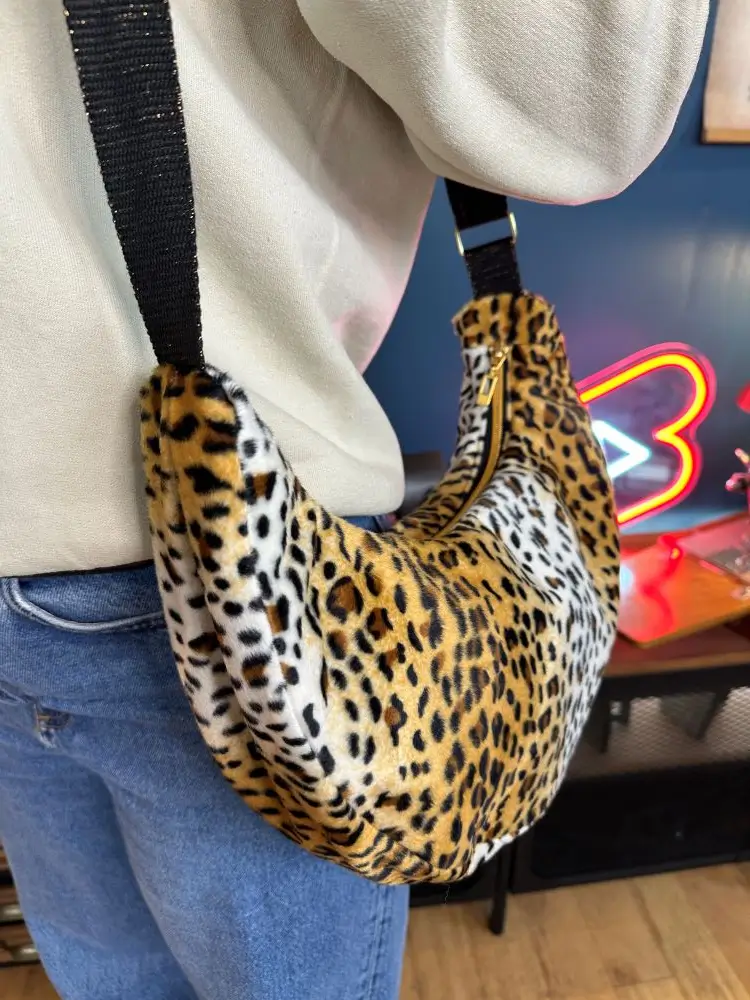
If you have fabric scraps or one-metre fabric lengths you do not know what to do with, sewing a bag is a good way to clear out your cupboards while adding an accessory to your wardrobe.
To make our half-moon bag, you will only need 30 centimetres of main fabric and 60 cm of lining.
Many fabrics work for this project: velvet, sherpa fleece, upholstery fabric, denim, coated canvas… You can also use a cotton and quilt it with wadding to make it thicker and more hard-wearing.
You will also need a zip, a strap and buckles to adjust its length.
Gift idea: This little half-moon bag is also an excellent handmade gift idea for the end-of-year holidays. With so little fabric, you can sew several from your scraps and personalise each one to match the style of the person you are giving it to. A beautiful burgundy velvet for one, a Japanese denim for another… The result is always stunning for so little material and time.
How to organise your winter sewing projects to go faster?
When you have little time on your hands, it is better to prepare your sewing sessions well. Here are a few habits that save precious time:
- Print and assemble your PDF patterns in advance, during a quiet moment, separately from the sewing session.
- Wash and press your fabrics the day before so you are ready to cut straight away.
- Prepare your thread, needles and accessories before you start.
- For projects that use fusible interfacing, cut out and press all the pieces in one go before you start sewing.
- Group similar operations together (all the straight seams first, then the turning, etc.) rather than finishing one piece at a time.
- Store your scraps by colour or by material in labelled boxes: you will know straight away what is available for a lining project or a detail.
These little habits turn a sewing afternoon into a genuinely productive moment. And with the projects we suggest here, you can easily finish a complete sewing project in two to three hours.
If you would like to explore other pattern ideas suited to the season, the winter patterns collection brings together all the designs made for the cold season.
Summary of winter sewing projects with less than a metre of fabric
To help you choose your next project, here is a quick summary:
- Short Calypso or Georgia skirt: 60 to 80 cm of fabric, intermediate level, ideal for dressy winter evenings.
- Goya vest (baby, child, adult): less than a metre, beginner level, the ultimate cosy project.
- Children’s long-sleeved T-shirt: 60 cm of jersey, beginner level, an essential wardrobe basic.
- Beira detachable hood: about a metre, intermediate level, an ultra-practical accessory for the whole family.
- Sérac half-moon bag: 30 cm of main fabric + 60 cm of lining, beginner to intermediate level, the perfect handmade gift.
All these projects lend themselves to batch making if you want to give handmade Christmas gifts.
FAQ: your questions about winter sewing projects with little fabric
Can you really sew a jacket or a vest with less than a metre of fabric?
Yes, absolutely! Sleeveless vests like the Goya pattern need less fabric than a classic jacket, since there are no sleeves to cut. For small sizes (baby and child), you will often be under 80 cm. For adult sizes, allow between 70 cm and 1 metre depending on your body shape.
Which fabrics should beginners avoid for winter sewing projects?
Very slippery fabrics such as silk or satin should be avoided when you are starting out. Favour materials with a bit of structure: corduroy, thick jersey, brushed sweatshirt fabric or even a nice denim. These fabrics are more forgiving of imprecise cutting and sewing.
How can you stop jersey from slipping when you cut it?
Fix your jersey to the cutting table with small fine pins or pattern weights before you mark and cut. Use well-sharpened scissors and cut in a single movement without going back and forth. If the fabric tends to slip, place some tissue paper underneath to stabilise everything.
Can you use scraps to line these small projects?
Absolutely. It is even recommended! For the vests, the bags and the hood, the lining can very well be made from cotton or jersey scraps lying around in your cupboards. It is an excellent way to make the most of your leftovers while keeping your spending down.
Are these projects suitable for beginner sewists?
Most of them, yes. The long-sleeved T-shirt and the Goya vest are accessible from your very first sewing projects. The skirt with a zip and the detachable hood require a little more technique, but remain very achievable with a good, well-explained PDF pattern and a bit of patience.
And what about you: what clothes or accessories do you like to sew for winter? Do you have anything particular in mind for your next projects?
Watch the videos
You can find these explanations in video form on our YouTube channel:
- Sewing an Adult Shepherd’s Vest | Easy Sewing Tutorial XS-3XL – Want to make the Goya vest? Here is how to sew an adult shepherd’s vest step by step
- The secret technique for sewing faux fur #coutureaddict #sewingtutorial – Would you like to use faux fur for your winter sewing projects? This secret technique will change everything
- PRACTICAL SEWING WITH YOUR FABRIC SCRAPS! – And to waste nothing from your winter fabric scraps, here are some practical and creative sewing ideas