10 Sewing Projects You Can Make in 30 Minutes Using Your Fabric Scraps
Do you save all your fabric scraps and don’t know what to do with them? Good news: the smallest pieces are often the most useful.
Here are ten accessories you can sew in half an hour, using our tutorials and free patterns.
There comes a time, when you sew regularly, when you end up with a bag of scraps you can’t bear to look at anymore. Too small for a garment, but too pretty to throw away!
That’s exactly where accessories come into play.
An accessory requires very little fabric, very little time, and very few supplies. It’s the perfect project for an evening, for trying out a new stitch, or for making a batch of gifts without spending the entire month of October on it.
We’ve put together ten projects that can be sewn in thirty minutes or less, each with a detailed tutorial and a free pattern. You can make them one after another, give them as gifts, or keep them for yourself: either way, your fabric scraps will finally get some use!
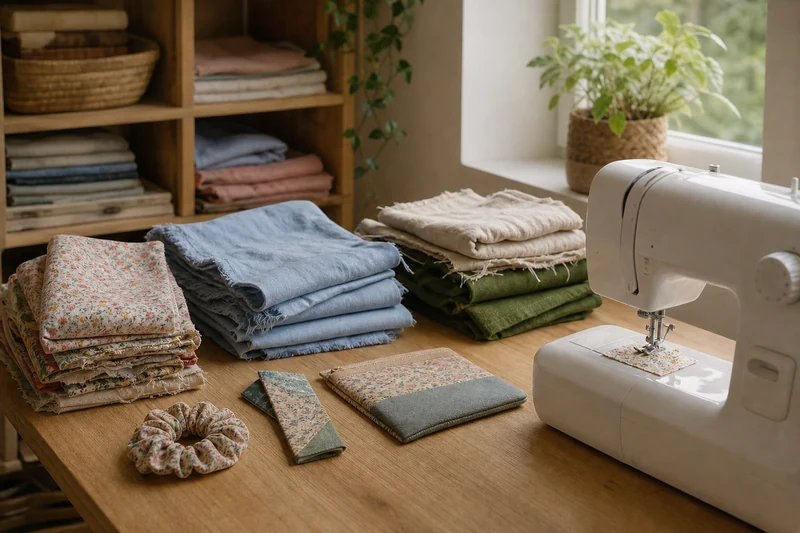
Before sewing: Which fabric scraps should you keep, and how big do they need to be?
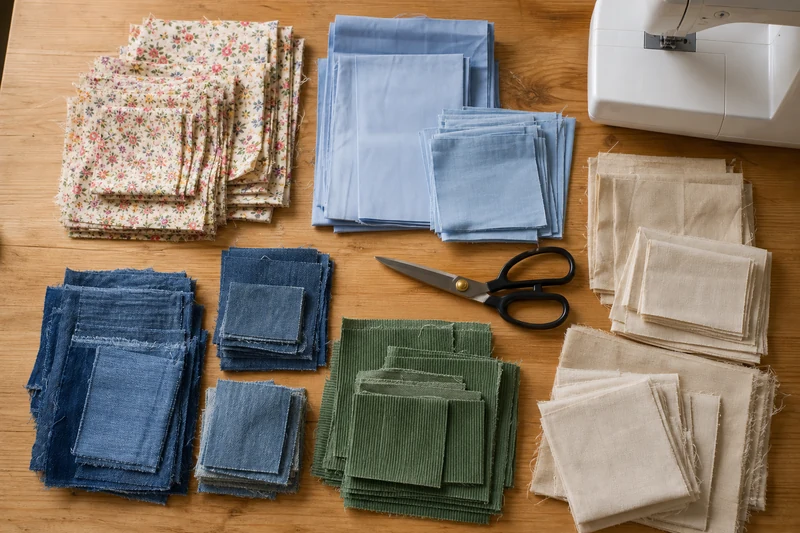
The most useful rule is simple: keep pieces that are at least 10 cm by 10 cm. Anything smaller than that is useless, except for a patch or an appliqué. Anything larger can be turned into a scrunchie, a headband, a pouch, or a bib.
That said, not all fabrics are created equal. For your first accessory, go with cotton, poplin, or linen: they don’t curl at the edges, they iron well, and they hold their creases.
Lightweight denim and faux suede also work very well for a cardholder or a case.
On the other hand, avoid using jersey for a 30-minute project: it curls up on itself, it slips, and it turns a quick seam into a real struggle.
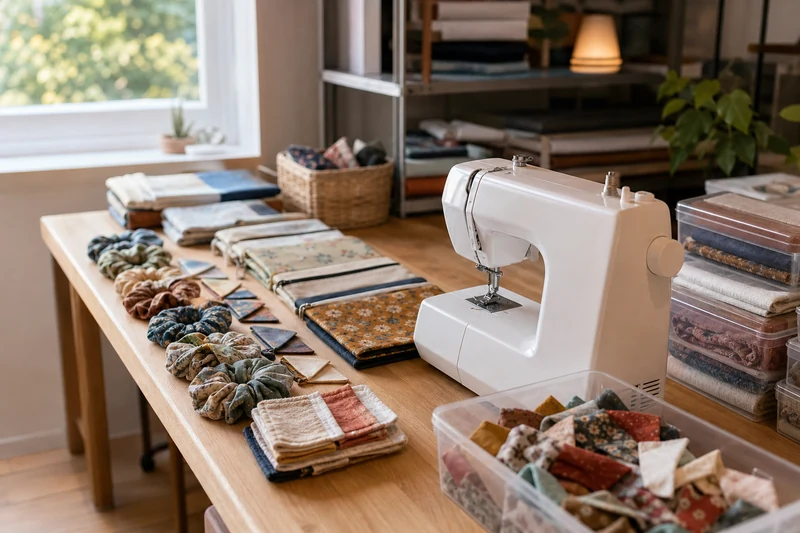
One last tip that makes all the difference: Sort your scraps as you go, by color and size, into clear boxes. When you have half an hour to spare, you’ll find what you need without having to search.
A bag of loose scraps—that’s a project that never gets off the ground!
1. The Foulchie: The Bow-Tied Headband You Can Sew in Ten Minutes
A “foulchie” is a scrunchie adorned with a small scarf. It’s the trendiest hair accessory right now, and above all, it’s the most economical project out there: all you need is a strip of fabric and an elastic band. You can sew it from any slightly flexible scrap of fabric, and you only need a very small amount.
Allow ten minutes for the first one, then five for each subsequent one, because the whole point of this project is to sew them in batches. The tutorial for the foulchie, including the pattern and video, is here.
2. The Bow Headband, for days when you’re feeling uninspired
Headbands are making a big comeback, and the bow-style version is the easiest to make. A strip of fabric, an elastic band at the back, a bow tied on top—and you’re all set. It’s the perfect accessory for repurposing a slightly dressy scrap of fabric, a floral print, or a scrap of velvet.
About fifteen minutes. The tutorial for the Bow Headband is here, and if you prefer a simpler version, the Classic Headband is even quicker to sew.
As for patterns, you’ll also find a headband pattern for girls and women on Coudre.Shop, in sizes S through L, for €4.90.
3. The Barrette Knot: The Ponytail That Becomes a Little Girl’s Accessory
This is the quintessential recycling project: a small bow attached to a hair clip, designed to be slipped into your hair. It’s sewn from tiny scraps—the kind we usually throw away—and requires nothing more than a hair clip and two stitches.
This is a great way to use the scraps from a garment you’ve just finished, by matching the barrette to the garment.
Ten minutes, including cutting. The tutorial for the Hair Clip Bow is here.
4. The Bookmark: Five Minutes for a Gift That’s Actually Useful
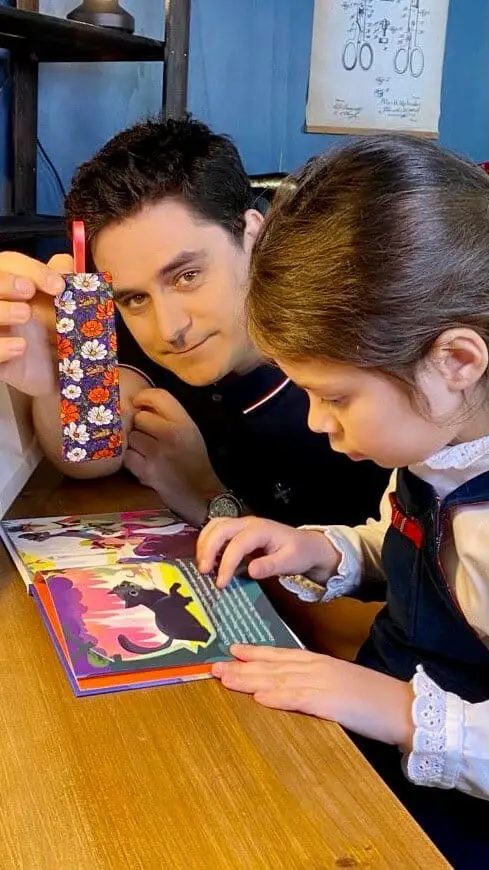
A square of fabric folded into a point, a straight stitch, and there you have a bookmark that won’t slip out of the book. It’s the quickest project on this list, and probably the one people give as gifts most often: you can sew about ten of them at once using scraps from a single piece of clothing.
Honestly, it only takes five minutes, and you don’t need a pattern. The bookmark tutorial is here.
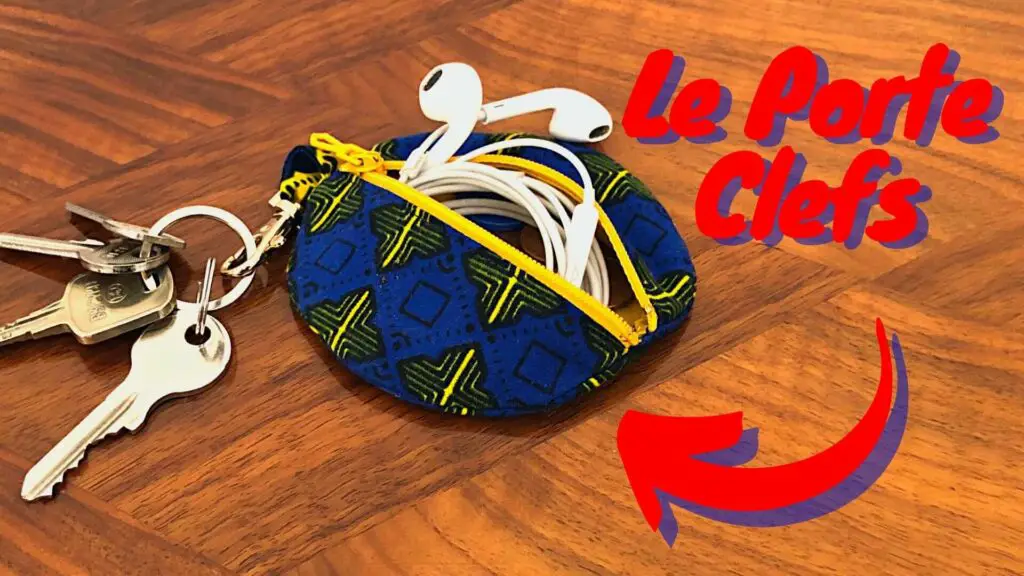
5. The Round Keychain—perfect for slipping into any bag
A small, flat, round body, a ring—and you have a keychain unlike any other. This project is particularly quick to make because it’s small and has almost no bottom to assemble. It’s also a great way to use up two contrasting scraps—one light and one dark.
About fifteen minutes. The tutorial for the Round Keychain is here.
6. The 3-Seam Pouch: The Perfect Project for a First Try
The name says it all: two folds, three seams, a ribbon—and the pouch is done. No zippers, no buttons, no fasteners to attach.
This is the project we recommend for beginners who want something presentable in just one evening, and it can be sewn with any cotton fabric that holds its shape reasonably well.
Fifteen minutes. The tutorial for the “3-Seam Pouch” is here.
7. Reusable wipes, to be sewn in packs of ten
Two squares of cotton, a stitch all around the edge, and you have a cloth that will replace hundreds of disposable cotton pads. It’s gentler on the face, and for a baby, it’s a must-have. The real secret is to sew them in batches: the first one takes ten minutes, the tenth takes three.
If you want to organize all these little items, the “Wipes and Their Basket” tutorial includes both projects, and the dispenser basket is a very practical option to place on the countertop.
8. The Glasses Case—so you never scratch your lenses again
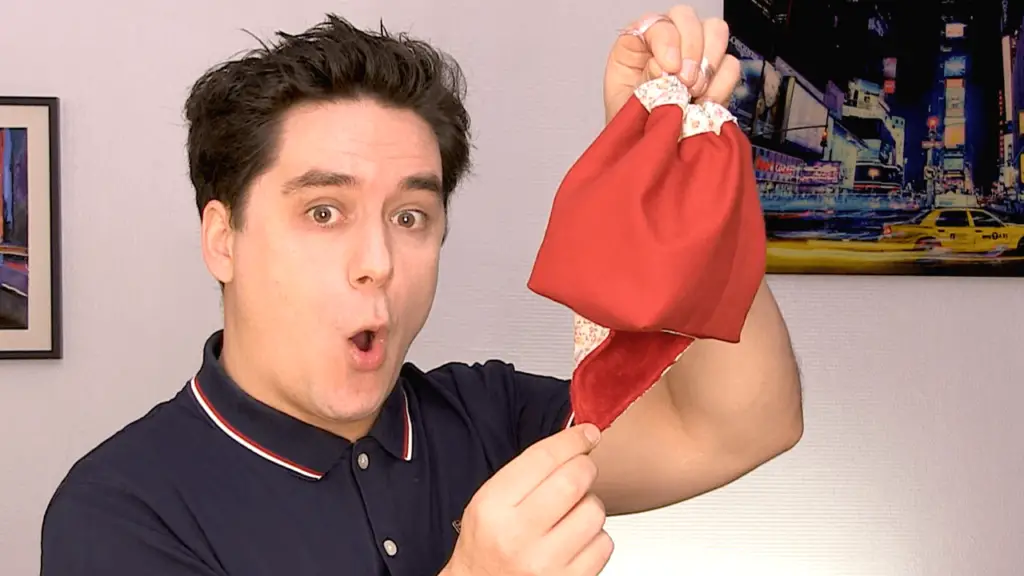
A glasses case is sewn from two rectangles—one of which is lightly quilted—and a seam to join them. It’s no more complicated than making a pencil case, but the result always makes an impression, because you never see two that are exactly alike. Use a slightly thick scrap of fabric—such as batting or thin fleece—for the inner lining.
About twenty-five minutes, for both the adult and children’s versions. The tutorial for the eyeglass case is here.
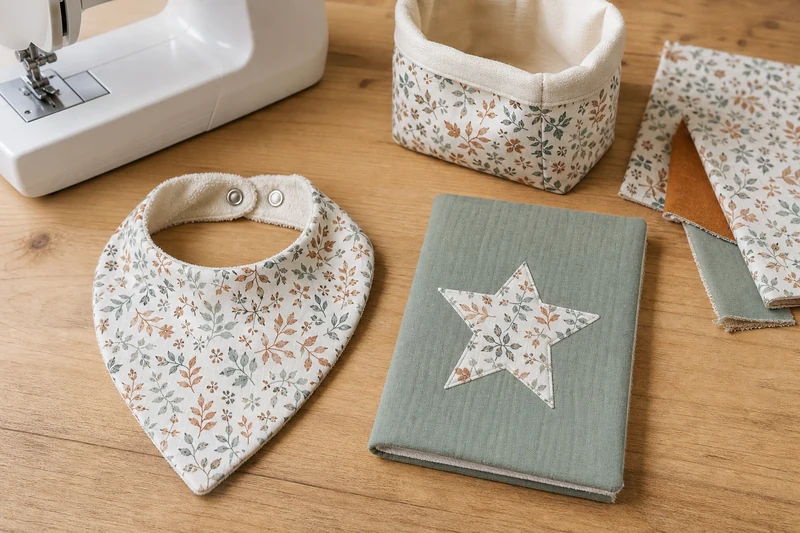
9. The Bandana Bib: A Baby Shower Gift That Takes Half an Hour to Make
Unlike a traditional bib, the bandana bib is mainly used outside of mealtimes: when a baby is teething, there’s always a mouth to wipe. It’s cut from a scrap of slightly thick cotton fabric, fastens with a snap, and is a great alternative to the bibs you buy in packs.
Allow 30 minutes—a little longer if you need to sew on the snaps. The Bandana Bib tutorial is here.
10. The Card Holder: Tiny but Surprisingly Satisfying
This is the project that makes the biggest impression, even though it fits in the palm of your hand and can be sewn from two scraps of fabric. A cardholder fits in any pocket or bag, and it always makes an impression when you pull it out at a café. It requires a little more attention than previous projects, especially when it comes to the corners and curves, but it’s still well within a beginner’s reach.
Allow thirty minutes for the first version, and much less for the second. The Card Holder tutorial is here, and if you want to explore other variations, check out the reverse version and the Mimicro card holder as well.
You can also add the” Fraise des bois” tote bag, available for €4.00 on Coudre.Shop, which is sewn from the same fabric scraps.
And if you have a little more than half an hour
Three projects are worth checking out, but they’ll take about an hour. Save them for a weekend afternoon—they’re well worth the time.
The Health Record Book Cover: It’s a must-have, whether for your own children or as a baby shower gift. It’s also a great way to learn how to sew without getting overwhelmed, since it involves working with interfacing, rounded corners, and appliqué.
The Storage Basket: It’s perfect for a drawer or shelf, for storing toys, makeup, or spools of thread. It’s the ideal project for using up several scraps of fabric in different colors.
The Night Mask: two layers, an elastic band, and you’re good to go. It’s actually very quick to make, but it requires soft fabric and a little patience when dealing with the elastic.
How to Sew Several Accessories in a Single Afternoon
The profitability of these small projects doesn’t come from speed; it comes from organization.
Here’s the method that really works.
- Group the cut pieces together. Print and cut out all the patterns at once, then cut out all the pieces. Switching back and forth between the cutting table and the sewing machine for each project takes more time than the sewing itself.
- Group them by thread color. If you’re cutting out three accessories from matching scraps, use the same spool for the entire set.
- Sew in batches. Ten wipes, five bookmarks, or four scrunchies can be sewn almost as quickly as a single one, because the steps flow together without (too much) thinking.
- Finish everything before putting it away. An item that hasn’t been ironed and turned right side out will never be finished. That final pass with the iron makes all the difference.
And don’t forget the gifts: a small pouch, a bookmark, and a keychain in a little bag—that’s a handmade gift that costs next to nothing.
If you’re looking for more sewing project ideas, the hair clip pouch and the hooded snood are great additions to the list, and all of our free PDF patterns are available here.
Frequently Asked Questions
How much fabric is needed to sew an accessory?
Starting with a piece measuring 10 cm by 10 cm, you can already make a bookmark, a hair clip, or a scrunchie. For a card holder or eyeglass case, you’ll want to use two pieces measuring 15 cm by 20 cm—which is still very small.
What fabric should you choose for your first quick sewing project?
Cotton or poplin. They don’t curl at the edges, they iron well, and they don’t slip under the presser foot. Save jersey and knit fabrics for projects where you have plenty of time, and faux leather for cardholders—where it looks great but is a little less forgiving.
Do these small projects need a boss?
No, many people just cut straight along a ruler. But for curves, angles, and precise dimensions, a pattern saves time and produces a much more consistent result.
All the tutorials mentioned in this article offer their own versions, and most of them are free.
Can we sew these accessories to sell them?
Whether it’s for personal use or as a gift, no problem. If you plan to sell the item, check the terms specified by each designer: some free patterns allow the sale of sewn items, while others do not. This information is listed on the pattern page.
Get ready to fall!
A hand-sewn accessory is rarely the project people talk about the most, but it’s almost always the one you use every day. And it’s the best solution for that overflowing bag of scraps: instead of keeping everything, hoping that one day you’ll turn thirty minutes into something useful.
Start with something simple, like a bookmark or a hair tie, and then keep going.
In a week, you’ll have emptied half your bag and filled your drawer with little gifts!