
How to sew and embrace the “color-block” trend?
Color-blocking is making a big comeback this year! It’s a vibrant trend that really gives our wardrobes a boost.
Here’s how to get started.
What is color blocking?
For the past few seasons, we’ve seen plenty of beige, gray, and taupe shades in stores and on the runway. This spring and summer, understated styles will take a back seat to bold colors and unique outfits.
As the name suggests, the idea behind color blocking is to dress in bright colors while making sure to avoid prints. The idea is to have fun with your outfits and pair bold, vibrant hues: green and pink, orange and blue, canary yellow and tomato red…
This trend draws inspiration in particular from the 1960s and Yves Saint Laurent’s iconic collection. The famous fashion designer had printed the blue, yellow, and red geometric shapes from Mondrian’s paintings onto his mini-dresses.
This trend is perfect for both adults and children: you can have fun with them coming up with the most creative color combinations.
Which colors should I choose?
The hardest part about the color-blocking trend is choosing the right shades and avoiding fashion faux pas.
To feel more confident, you can take inspiration from the many articles or celebrities (like Victoria Beckham) who often wear colorful clothes.
Take note of the colors they like to pair together and try to find them at your favorite fabric store.
Another way to create effective color combinations is to use a color wheel. Adobe’s tool lets you generate a color palette based on electric blue, pastel yellow, burgundy, and more…
You can also invest in a color combination guide—often used by architects—to help spark your creativity every day!
How can you rock the color-blocking trend?
There are plenty of ways to make this trend your own!
By mixing bold colors in a single outfit
The first option is to mix and match several pieces in a single outfit. Choose loose-fitting, comfortable styles for a relaxed, on-trend look. For example, you could sew our Rigotte pants (available for children and adults) in a bright color like electric blue. To wear them in the summer, choose a soft, supple viscose fabric.
For the top, make a simple, slightly cropped cotton top like the “Fleury” from Vestiaire Éponyme ( or a jersey T-shirt for kids). Here, you could choose a mustard yellow cotton, for example.
All that’s left is to pair it with a jacket (such as the Ibis bomber jacket from Instinct Couture, also available in children’s sizes) made from a lovely fuchsia-colored fleece fabric.
By choosing garments with multiple panels
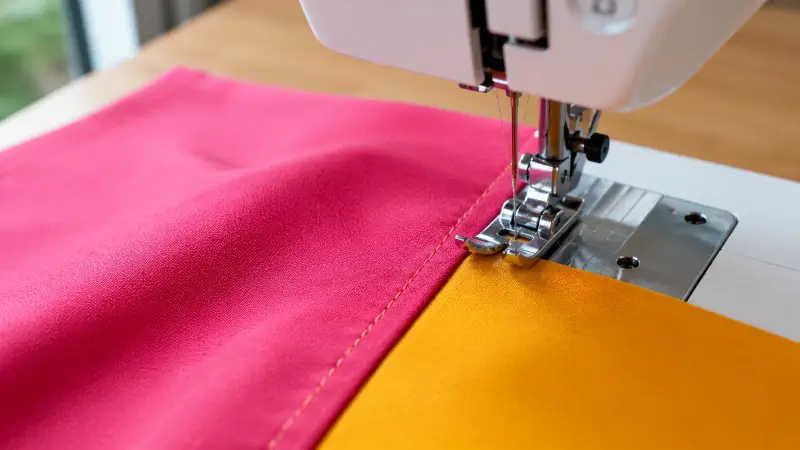
You can also incorporate the color-blocking trend into a single garment. To do this, choose a pattern that includes several panels and is made up of different pieces of fabric.
This is the case, for example, with the Softy T-shirt from Moi je Couds, which involves piecing together several pieces of jersey fabric. This allows you to use a variety of colors and have fun with color palettes.
The Georgia skirt by Vestiaire Éponyme is also constructed from several pieces. It’s a great base for experimenting and mixing bright yellow with red, or sky blue with orange fabric.
If you’d rather try out this trend with a more understated piece, you can sew the Miss Cactus sweatshirt and use just two bold colors. Or start with softer color combinations, like green and dusty pink.

By using different colors on the same piece
To make a color-blocked piece, you don’t necessarily need to buy new patterns!
You can also experiment with different colors on a wardrobe staple you already own. For example, take a ruffled skirt and sew on a ruffle in a contrasting color.
Similarly, you can sew the sleeves, ribbing, and cuffs of a sweatshirt using different shades of jersey fabric. Overalls can also be turned into a unique piece if you choose different colors for the legs, straps, and front of the garment.
What about you? Do you like playing around with color combinations? Which ones are your favorites?