
Want to sew and customize T-shirts for the whole family?
Sewing a T-shirt? It couldn’t be easier! Check out our tips for finding the right style for you and customizing it to match all your outfits.
The T-shirt is undoubtedly the most versatile item in any wardrobe: you can wear it in summer and winter, on its own or layered, whether you’re working out or at the office. It’s also one of the quickest garments to sew, making it an ideal project for getting started with jersey sewing or for outfitting the whole family without breaking the bank.
In this article, we’ll walk you through the process step by step: materials, choosing a model, customization, finishing tips, and answers to the most frequently asked questions.
What You’ll Need to Sew a T-Shirt
If you have a serger, you can of course use it to sew your T-shirts. But if you have a standard sewing machine, don’t worry: it’ll work just as well for sewing all your jersey projects (a fabric that’s knitted, not woven).
All you need to do is use a special needle (called a jersey needle or stretch needle) and a stretchy stitch for the neckline or hems, so they don’t lose their shape.
There’s bound to be a stretch stitch on your machine: a stretch stitch, a zigzag stitch… You should also avoid cotton thread and opt for polyester thread, which is more elastic.
As you can see, jersey is a stretchy fabric, and you need to keep that in mind when working with it!
Essentials to Prepare Before Sewing
Before you get started, set up your work surface with a few tools that will make your life easier: fabric clips (more convenient than pins on jersey, since they don’t leave marks on the fabric), a rotary cutter with a self-healing cutting mat for clean edges, a patchwork ruler, and an iron with a steam function. Ironing after each step is truly the key to a neat finish.
If you’re just getting started with sewing, take a look at our comprehensive guide to choosing the right sewing machine—it will help you make the right choice.
Which jersey fabric should you choose for sewing a T-shirt?
Not all jerseys are created equal, and the final look will depend largely on the fabric you choose. Here are the main categories you should know about:
- Cotton jersey: the most commontype —soft, comfortable, and easy to sew. Perfect for an everyday T-shirt.
- Modal or viscose jersey: more fluid and a little more delicate to work with, it drapes beautifully for slightly dressier T-shirts.
- Ribbed jersey (or 2×2 rib): highly stretchy, ideal for necklines, cuffs, or the waistband of a form-fitting T-shirt.
- French terry or lightweight fleece: perfect for transitional seasons; it’s a little thicker and has a look that’s somewhere between a T-shirt and a sweatshirt.
For your first T-shirt, go with a cotton jersey that weighs about 200 g/m²—it’s the most forgiving. And if you’re looking to save money on fabric remnants, you might like our tips for buying fabric on a budget.
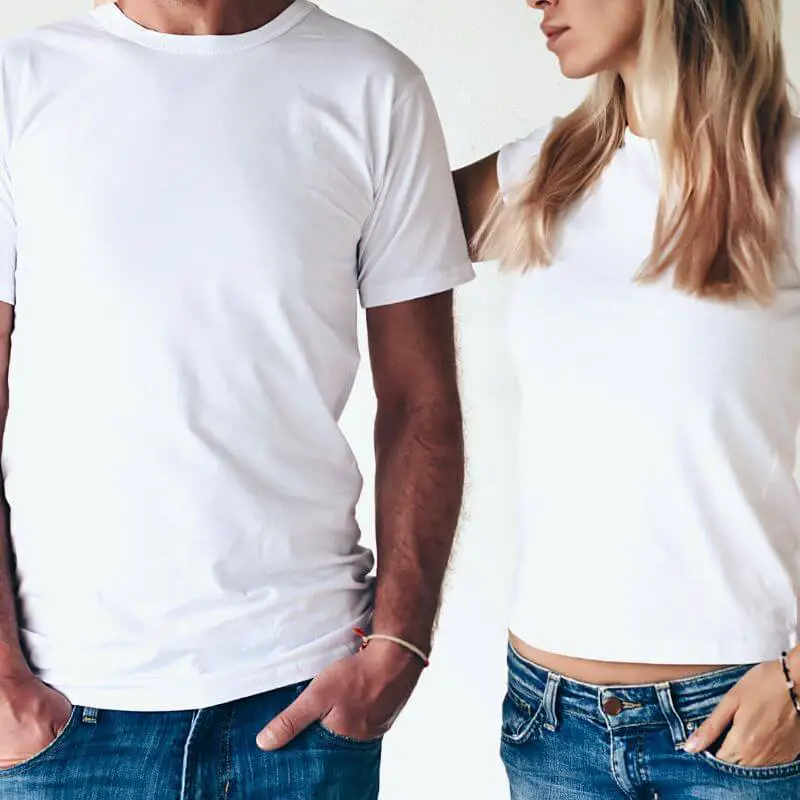
Choose a basic style that makes you feel comfortable
It’s important to choose the right pattern so you can find a “go-to” T-shirt that you’ll be able to sew over and over again! Everyone has different preferences: some people like their T-shirts form-fitting, others prefer them loose-fitting; necklines can be tight or loose, round or V-neck…
You can try it out on an inexpensive jersey to test the pattern you’ve chosen, see if it works for you, and make adjustments where needed—such as the length of the body or sleeves…
There are many T-shirt patterns available online. For women, the ” Plantain” pattern from Deer and Doe is free. It’s available in both short-sleeve and long-sleeve versions. It has a relaxed fit.
There are also plenty of patterns for kids, such as the one from Petits d’Om, which offers lots of customization options. Or, if you prefer something simpler, try our homemade pattern, which comes with short or long sleeves 🙂
For men, you can choose the Hercule pattern from Urban Fairy (free).
If you want to sew for the whole family, Petit Patron’s super pack —which includes patterns for women, men, and children—is perfect!
Our favorite T-shirt that fits the whole family
If you’re looking for a one-of-a-kind pattern that works for everyone—big and small—we highly recommend ” Cranberry,” the T-shirt for the whole family: a design created for everyone, with several sleeve and length options.
You can also check out the collection of patterns for the whole family—perfect for making matching outfits.
And if you’re looking for an even more versatile project, Cacao—the multi-option sweatshirt/T-shirt—offers dozens of variations based on a single pattern.
Adapt the style to your body type
The same pattern can produce very different results depending on the adjustments you make to it. Feel free to:
- Lengthen or shorten the body by a few centimeters so that it falls right on the hips.
- Adjust the neckline depth: a wider round neckline creates a more dressy look, while a V-neckline slims the figure.
- Widen the sleeves for a trendy oversized look, or, conversely, take them in for a form-fitting look.
- Add side slits for a more flowing, feminine T-shirt.
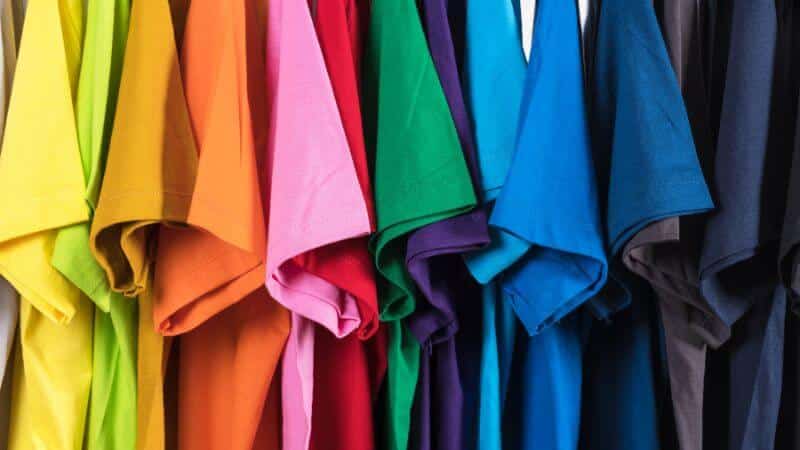
Customize Your T-Shirts
Once you’ve found a pattern you like, you can customize it however you want! For example, you can sew it in a print or a trendy color.
Get into the habit of noticing these elements (shapes, colors, and prints you like) when you walk past store windows. It’s a great way to get ideas for future sewing projects.
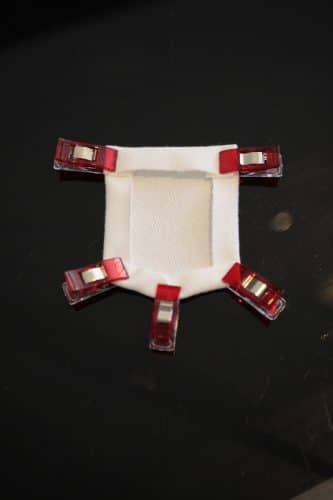
To personalize a T-shirt, you can sew on a chest pocket. It’s a great way to add a touch of originality and a bit of contrast. For example, you could choose a solid-colored jersey and sew on a pocket with a print, or simply one in a contrasting color.
To sew a pocket, simply cut a square of the desired size (allowing for a 2- or 3-cm seam allowance at the top of the pocket), fold in a 0.5-cm hem, and press it with an iron. For the top of the pocket, leave a wider hem of 2 or 3 cm. Then sew three of the pocket’s edges, and you’re all set!
More customization ideas that are easy to try out
- Contrasting sleeves: Cut the sleeves from a different fabric (solid, striped, or printed) for a graphic “baseball jersey” look.
- Side stripes: Adding a vertical stripe on each side of the body, like on athletic T-shirts, makes the silhouette look longer.
- Asymmetrical hems: longer in the back than in the front, for a modern look.
- Patches and emblems: perfect for kids’ T-shirts, they can be sewn on in just a few minutes and turn a basic T-shirt into a one-of-a-kind piece.
- Appliqués: Cut out a shape from a contrasting jersey fabric and secure it with a tight zigzag stitch. The Letter Appliqué collection is perfect for embroidering a child’s first name or a fun word.
The Miracle of Embroidery!
Embroidery is also a very popular way to personalize a T-shirt. If you’re making T-shirts for the whole family, you can embroider each person’s nickname or the silhouette of characters your children love.
To embroider a first name, you can use a simple running stitch. It’s one of the basic embroidery stitches and is very easy to learn. If you’d like, you can stabilize the jersey fabric with water-soluble stabilizer.
There is also printed DMC “magic paper.” It allows you to embroider a design from the brand’s selection.
The color-block effect also looks great on T-shirts! It’s very easy to achieve: instead of using just one color, you simply create panels in different colors and sew them together.
You can use one color for the body and a different color for the sleeves and collar. Or you can switch colors at the top or bottom of the body… It’s up to you!
Styling T-shirts for Different Seasons and Occasions
The best thing about a homemade T-shirt is that you can use the same pattern all year round. In the summer, go for lightweight jersey, short sleeves, and light colors. In the transitional seasons, make the sleeves longer and choose a slightly thicker French terry. And in winter, a long-sleeved T-shirt makes the perfect base layer to wear under a cardigan or a cozy sweatshirt, as we explain in our article on sewing a winter sweatshirt.
To round out your children’s wardrobe, be sure to check out our collection of children’s T-shirt patterns, which includes a wide variety of styles suited to all body types and all seasons.
For adults, the collection of women’s T-shirt patterns and the men’s collection will give you everything you need to refresh the whole family’s wardrobe.
Sewing Tips for a T-Shirt with a Flawless Finish
- Always bind your neckline: cut a strip of jersey fabric about 85% the length of the neckline, sew it into a circle, then spread it out before sewing it in place. That’s the secret to a neckline that doesn’t gape.
- Use a twin needle for hems: two parallel rows on the right side and a zigzag stitch on the wrong side, for a stretchy, professional finish.
- Use temporary fabric glue to secure the pieces before stitching the delicate areas: this prevents them from shifting.
- Never pull on the fabric while you’re sewing; let the machine feed it naturally.
- Always test your stitch on a scrap piece before starting your project. Stitch tension and length vary depending on the jersey fabric.
FAQ: Your Questions About Sewing T-Shirts
How long does it take to sew a T-shirt?
Once you’ve printed the pattern and cut out the fabric, allow between 1 hour and 30 minutes and 2 hours for your first T-shirt, and about 45 minutes once you’ve mastered the pattern. It’s one of the quickest sewing projects.
Can you sew a T-shirt without a serger?
Absolutely. A standard sewing machine equipped with a jersey needle and set to a stretch stitch or a small zigzag stitch produces perfectly satisfactory results. An overlocker simply saves time and provides a neater finish on the inside.
How much fabric do I need for a T-shirt?
Allow about 70 cm to 1 m of jersey fabric with a width of 150 cm for an adult T-shirt. And 50 to 70 cm for a children’s T-shirt. Always check the yardage indicated on the pattern, as it varies depending on the size and length you choose.
How can I prevent my neckline from losing its shape?
The secret is to cut the neckband shorter than the T-shirt’s neck circumference (usually 80 to 90 percent of the length), then stretch it slightly while sewing. Also, use a stretch stitch and iron gently, without stretching.
What level do you need to get started?
This T-shirt project is suitable for beginners who have already sewn a few simple projects. If this is your first time working with jersey fabric, choose a very basic pattern without a neckline that’s too complicated, and take your time with the finishing touches.
What about you—do you like sewing T-shirts? What’s your favorite pattern—the one you never get tired of sewing?


