7 Tips for Caring for Your Fabrics and Making Them Last Longer
You’ve probably noticed: sewing is a relatively expensive hobby! Once you’ve bought your sewing machine, serger, scissors, needles, iron, etc., you’ll still need to treat yourself to a few pieces of fabric every now and then to practice and have some fun!
After spending hours tracing, cutting, sewing, and ironing your project, what could be more frustrating than realizing, after a while, that your fabrics have lost their vibrancy and durability?
What are some tips for making your fabrics last as long as possible?
In this article, I’m sharing my 7 sewing tips (tried and true) to help you preserve your fabric scraps, extend the life of your handmade clothes, and avoid having to start all over again after just a few months. Whether you’re sewing children’s dresses, cozy pajamas, or everyday accessories, these tips apply to all your sewing projects.
Why Fabric Care Is Crucial in Sewing
When you sew, you invest time, energy, and money. A beautiful piece of double gauze, high-quality jersey, or soft sweatshirt fabric can easily cost 20 to 30 € per meter. Multiply that by the hours spent cutting, assembling, serging, and ironing, and you end up with a creation that deserves better than a harsh wash at 60° with just any detergent.
Proper care is also an eco-friendly choice. Making your clothes last twice as long means cutting your fabric consumption in half. And when you sew for children who grow quickly, you can hope to pass the clothes down to a younger sibling or cousin, or resell them in excellent condition.
Washing fabrics too often and at high temperatures
I’ll start with a chilling statistic: with every wash, hundreds of thousands of plastic microfibers are released into the water and end up in the ocean. This data applies only to petroleum-based textiles (polyester, acrylic, fleece, etc.), but it sheds light on the impact of washing on fabrics in general.
Every wash causes a little more wear and tear on your fabrics, no matter what they’re made of. The damage is minimal, but it eventually becomes noticeable after a while.
Fading colors, loss of elasticity, clothes that lose their shape. In short, nothing is right!
Therefore, be sure to wash your fabrics gently, preferably at a low temperature.
There’s no need to boil your fabric scraps once you get back from the fabric store. A simple wash at 30° is enough to remove the sizing and clean them. If you’re wondering whether you should wash your fabric before sewing it, check out this article I wrote. It will give you a clearer understanding of the reasons why.
Wash Less Often: A Habit to Adopt
Clothes don’t always need to go in the wash after just one day of wear. A pair of jeans can be worn several times, and so can a wool sweater (a quick breath of fresh air on the balcony is often enough to freshen it up). For kids, it’s obviously more complicated (chocolate stains, grass, paint…), but try to distinguish between clothes that are truly dirty and those that are just worn.
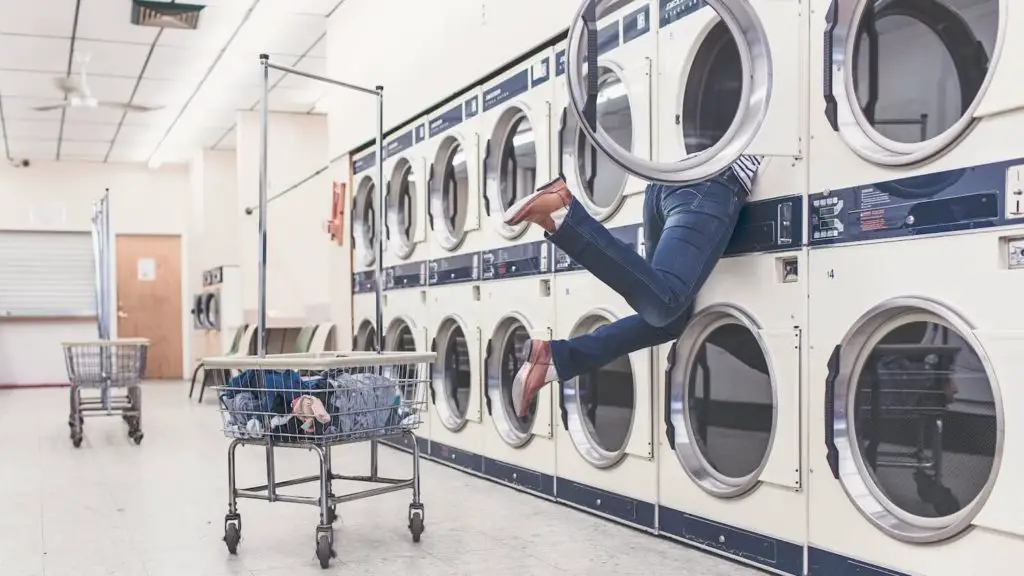
Do not reinforce your washing machine
Think of your washing machine as a jar of pickles. When the jar is full, no matter how much you shake it, the pickles won’t move. However, when it’s not quite as full, you can shake the jar without much trouble.
It’s the same for your washing machine—minus the vinegar smell!
The more you pack your machine to the brim, the less effective the wash will be. It’s fun to imagine clothes dancing around crammed together in the drum like at a foam party, but that doesn’t clean them well, and it damages the fabric because it rubs against itself much more.
So, even if you think you’re saving money by filling your washing machine to capacity, it will actually have the opposite effect.
The right amount of laundry: the “hand” rule
Here’s a simple tip: once the machine is full, slide your hand vertically between the laundry and the top of the drum. If it slides through easily, you’ve got the right amount. If you have to pack it down, there’s too much laundry. This little habit can extend the life of your sewing machine by several months.
Use the right detergent… And skip the fabric softener!
If you watch TV commercials, you’ll notice that there are as many different laundry detergents as there are types of fabric. The boundless imagination of cleaning product manufacturers is truly amazing!
There are two main categories of laundry detergent that make up the market: liquid detergent and powdered detergent.
Liquid laundry detergent seems to be the better choice at this time. It does not contain any bleaching agents and does not cause fabrics to fade over time. In addition, it is more effective at low temperatures.
So, for everyday use, choose a laundry detergent in this form.
For dosage information, carefully read the instructions on the back of the bottle to find out how much to use. Just because you use more detergent doesn’t mean your clothes will come out of the washing machine any cleaner!
When it comes to fabric softener, on paper it seems like it’s the solution to all of life’s problems! Fabric softeners make life softer, make it smell great, and fill the air with floating flowers!
However, fabric softeners aren’t great for the fibers in your fabrics. And I’m not even talking about the environmental impact or the fact that you’re adding new chemicals to your fabrics.
In short, if you want to soften your laundry or fabric a bit, fill the fabric softener compartment with white vinegar—this will neutralize the effects of limescale on the fabric without adding any scent.
Which detergents are best for which fabrics?
- Cotton, linen: wash as usual with liquid detergent at 30°, no special precautions needed.
- Jersey, sweatshirts, Lycra: gentle wash cycle, especially for fabrics with printed designs (transfers).
- Wool, silk, viscose: Use a special detergent (pH-neutral), wash in cold water or at 20°, on the delicate cycle.
- Fleece and synthetic fabrics: Wash on a gentle cycle, and ideally in a mesh bag to minimize the release of microfibers.
Avoid poor-quality fabrics
It makes sense when you think about it. Using high-quality raw materials will make your creations last much longer than if you buy the cheapest fabric.
Of course, there are always surprises. You’ll probably come across some very mediocre fabrics at exorbitant prices from time to time, or high-quality cotton for less than €3 per meter.
But overall, quality comes at a price. And sometimes you have to prioritize your projects in order to afford higher-quality fabric, thread, or sewing supplies.
You’ll have much more fun and far fewer frustrations when sewing with materials that hold up well.
So, think about your own happiness and pay the price for peace of mind by agreeing to spend a few extra euros. Forget about pilling after the first wash, forget about threads that snap, and forget about clothes that are barely sewn together and already unwearable!
How to Tell if a Fabric Is High-Quality: My Tips
Here are a few tips for evaluating fabric before you buy:
- Weight per square meter: A lightweight cotton fabric will weigh 90 to 120 g/m², while a high-quality sweatshirt fabric will typically weigh around 280 to 320 g/m². A weight that is too low for the advertised category should raise suspicion.
- Texture: A fabric that feels rough, dry, or strangely “plastic-like” will often not age well.
- Transparency: Fold the fabric in half and look through it. If it’s very transparent even though it’s supposed to be thick cotton, be wary.
- Fabric composition: Choose natural fibers or blends that are mostly natural fibers (cotton, linen, viscose, modal).
And to get started with confidence, choose tried-and-true patterns, such as those for beginners or patterns that come with video tutorials, which will help you avoid wasting a nice piece of fabric on a haphazard attempt.
Wash your creations inside out
Once sewn, your creations should be durable and wearable for as long as possible. Generally speaking, you don’t sew something just to wear it only once after spending hours and hours working on it.
Turning your clothes and other items inside out before washing them protects them from friction and helps the colors last longer.
This is especially true for the denim fabric in jeans, but it’s a habit you should adopt for all your clothes.
Children’s T-shirts (or adult T-shirts, for that matter) with a heat-pressed design must also be washed inside out to preserve the design.
In short, get into the habit of turning your clothes inside out before putting them in the wash! Personally, I find it easier to take my clothes off by turning them inside out than to keep them the right way around!
If you’re not sure how to do it, watch how the kids do it!
The laundry net: a sewing enthusiast’s best friend for delicate items
For the most delicate items (lingerie, flowing blouses, viscose dresses, embroidered baby clothes), consider using a laundry net. It’s a small mesh pouch that protects your garments from friction and snags. A must-have for newborn clothes made of fine jersey or for your flowing viscose blouses.
Wash separately
This is the basic rule: always separate whites from colors before washing your fabrics! There’s no way I’m going to risk even the slightest color bleeding from any of the fabrics!
The result would be catastrophic!
Similarly, try to wash your fabrics by “type.” Cotton with cotton, synthetics with synthetics… In general, washing machines offer programs tailored to each type.
A little extra tip: Watch out for zippers that might snag on other clothes, as well as the hooks on pants. Remember to zip them up to prevent snags during the wash!
The Anti-Fading Wipe Test
For fabrics with bright colors (deep reds, indigo blues, intense blacks), I strongly recommend slipping an anti-bleed sheet into the drum the first few times you wash them. It captures the pigments that would otherwise leach out of the fabric and prevents disasters. This is especially useful for the first few washes of handmade jeans or dyed linen garments.
Drying Clothes in the Sun
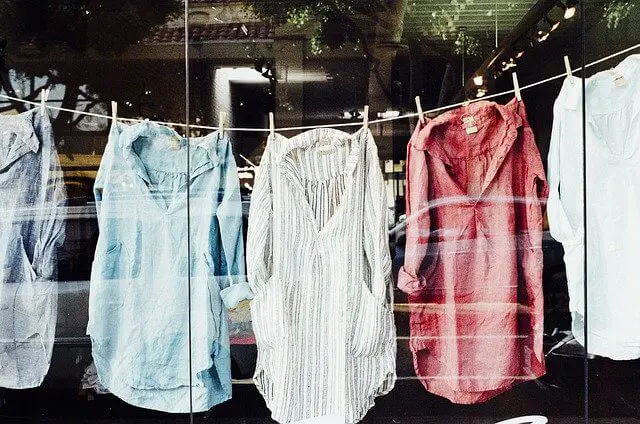
On paper, this might seem like a good idea: bright sunshine, a line to hang the fabric to dry between two trees or two stakes, and perhaps a light breeze to speed up the drying process.
Or just a clothesline on a patio or balcony, so as not to make your apartment damp…
Unfortunately, the harsh reality of life puts a damper on this bright outlook! The sun’s ultraviolet rays fade the colors, dull the patterns, and weaken the fabric’s fibers.
Similarly, letting your fabrics dry overnight will have much the same effect! Since the moon’s brightness comes from the reflection of the sun’s rays, the impact on the colors will be almost the same!
What about the dryer? Shall we talk about it?
The dryer is the number one enemy of your sewing projects. It causes cotton to shrink, distorts jersey fabrics, damages spandex, and weakens all fibers. If you do use it, be sure to select the gentlest cycle and remove the laundry while it’s still slightly damp. Ideally, dry your creations flat (for knits and jersey fabrics) or on a hanger, in the shade, in a well-ventilated room. Your clothes will thank you.
Reuse, mend—to make things last longer
Do you have a piece of clothing with a tear, or a stain that won’t come out no matter how hard you try? Instead of throwing it away, why not customize or repurpose the parts of the garment that are still usable?
This practice is called “upcycling,” and I wrote an article about it a while back!
A Few Simple Ideas for Giving Things a Second Life
- A shirt that’s too small can be turned into a child’s smock or a cloth bag.
- Pants with a hole in the knee can be shortened into shorts or Bermuda shorts.
- A sheet that’s worn out in the middle can be turned into linings, washable wipes, or test patterns.
- Jersey fabric scraps make for very cute bibs, headbands, or accessories for kids.
- A sweatshirt withflared cuffs can be turned into a cardigan by adding a closure and a little skill.
Upcycling is also a great way to sew without spending a penny on fabric, and to instill in children a real appreciation for the value of clothing.
Bonus: Ironing—Friend or Foe?
An iron is essential for sewing (we can’t stress enough that ironing between each step makes all the difference in the final result). But between washes, there’s no need to iron everything every time. Too much heat damages the fibers and makes certain fabrics shiny, especially synthetics.
A few helpful tips: use a damp cloth as a barrier between the iron and delicate fabrics; iron printed or embroidered items on the reverse side; and always adjust the temperature to match the type of fabric. For jersey fabrics, use steam without applying pressure to the fabric.
FAQ: Your Questions About Fabric Care
Do you always have to wash fabric before sewing?
In the vast majority of cases, yes. This helps to pre-shrink the fabric (so it shrinks before cutting), remove industrial finishes, and set the colors. Only a few very specific fabrics (certain silks, leather, and some oilcloths) require special treatment. My full article on the subject is available on the blog.
At what temperature should I wash a hand-sewn garment?
30° in the vast majority of cases. This is enough to clean properly and is gentle on the fibers. Reserve the 40° or 60° settings for very dirty items (kitchen linens, soiled sheets) or terry towels.
How do you remove a stain from fabric without damaging it?
Act as quickly as possible, without rubbing (which spreads the stain). Dab the stain with a clean cloth and use a stain remover appropriate for the type of stain: Marseille soap for greasy stains, diluted white vinegar for grass stains, and sparkling water for wine stains. Always test the stain remover on a scrap of the same fabric first.
How long should a hand-sewn garment last?
With good fabric and careful care, an adult garment can last 5 to 10 years without any problems. For children’s clothing, wear and tear isn’t usually the issue (it’s growth that makes clothes too small). The good news is that your handmade clothes can easily be passed down to a younger sibling or resold secondhand.
Can white vinegar really replace fabric softener?
Yes, and in many cases it works even better. It neutralizes limescale, restores colors, eliminates odors, and doesn’t leave residue on the fibers. Use about 100 ml per cycle in the fabric softener compartment. Don’t worry—the vinegar smell will disappear as the laundry dries.
I hope these care tips will help you make the fabrics you buy—and the clothes you sew—last longer! Taking care of your handmade garments means honoring the time you’ve put into them, saving money in the long run, and doing your part for the planet. Three excellent reasons to put these tips into practice starting with your next load of laundry.
Happy sewing!